

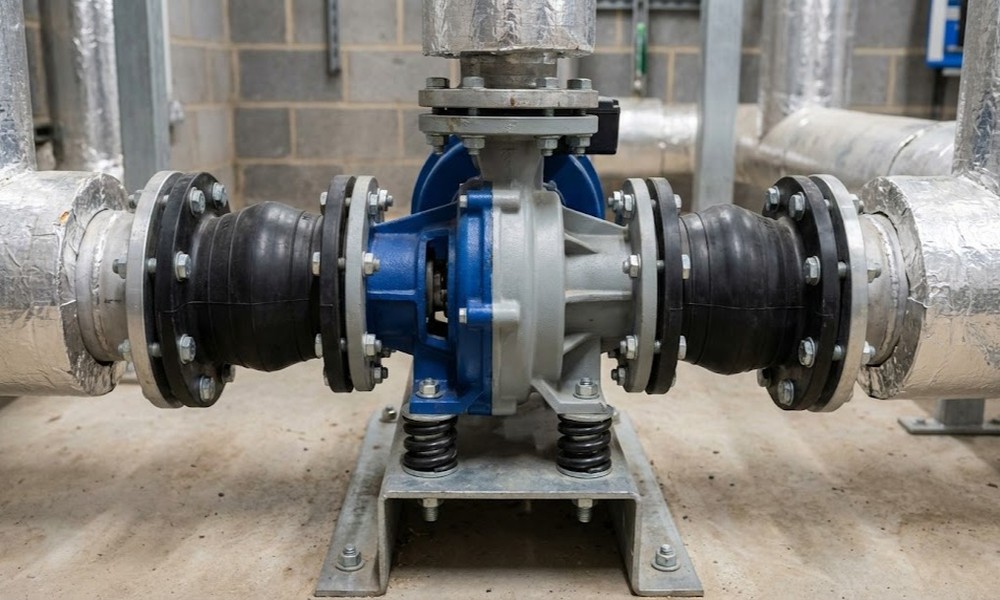
Industrial piping systems often carry fluids or gases under high pressure and velocity, which can generate vibrations, thermal expansion, and mechanical stress. These forces can damage pipes, joints, and equipment over time if not properly managed.
Flexible connectors, such as expansion joints and flexible hoses, are critical components that help absorb movement, reduce stress, and protect piping systems in UK industrial facilities.
What Are Flexible Connectors?
Flexible connectors are specially designed pipe components that allow controlled movement in a system. They can compensate for:
- Thermal expansion and contraction
- Mechanical vibration from pumps, compressors, or machinery
- Misalignment between pipe sections
- Pressure surges or transient flow changes
Common types include:
- Bellows Expansion Joints: Corrugated metal or rubber elements that expand and contract with temperature changes
- Flexible Hoses: Rubber or composite hoses that absorb vibration and minor misalignment
- Looped or U‑Shaped Connectors: Provide flexibility in rigid piping runs
By incorporating flexible connectors, engineers can protect rigid pipework from premature wear, leaks, and failure.
Key Benefits of Flexible Connectors
1. Vibration Isolation
Flexible connectors dampen vibrations from pumps, compressors, or motors, preventing fatigue in metal pipes and reducing noise levels.
2. Stress Reduction
By absorbing movement caused by thermal expansion, flexible joints reduce stress on pipe supports, welds, and fittings.
3. Easier Installation
Flexible connectors can accommodate minor misalignments during installation, making assembly faster and less prone to errors.
4. System Longevity
Reducing mechanical stress and vibration extends the life of the piping system, valves, and connected equipment.
5. Safety Improvement
Preventing cracks, leaks, and joint failures improves operational safety, reducing the risk of hazardous spills or downtime.
Applications Across UK Industries
- Chemical Processing: Flexible connectors protect pipes handling corrosive or high temperature fluids.
- Water and Wastewater Treatment: Absorb pump vibrations and compensate for thermal expansion.
- HVAC Systems: Reduce noise and vibration in heating, ventilation, and cooling pipelines.
- Food and Beverage Production: Ensure hygiene and prevent damage to piping carrying liquids under pressure.
- Power Generation: Support high pressure steam or water pipelines while allowing safe thermal movement.
In each application, flexible connectors provide reliability and reduce maintenance requirements, making them an essential component of modern piping systems.
Frequently Asked Questions
Can flexible connectors handle high pressure systems?
Yes. Metal bellows and reinforced hoses are rated for high pressures, but always verify the specifications to ensure safe operation.
How often should flexible connectors be inspected?
Inspection frequency depends on system use and material. Regular checks for wear, cracks, or leaks are recommended to maintain system integrity.
Do flexible connectors replace pipe supports?
No. They work alongside proper supports to absorb stress and vibration but do not eliminate the need for secure pipe mounting.
Can they be used in corrosive environments?
Yes. Flexible connectors can be made from corrosion-resistant materials such as stainless steel, rubber, or PTFE composites.
Final Thoughts
Flexible connectors play a vital role in reducing vibration and stress in industrial piping systems. By absorbing movement, compensating for thermal expansion, and isolating vibrations, they protect pipework and connected equipment, improving system longevity and safety.
Incorporating flexible connectors in UK industrial facilities ensures reliable performance, lower maintenance costs, and safer operation across a wide range of applications.
