

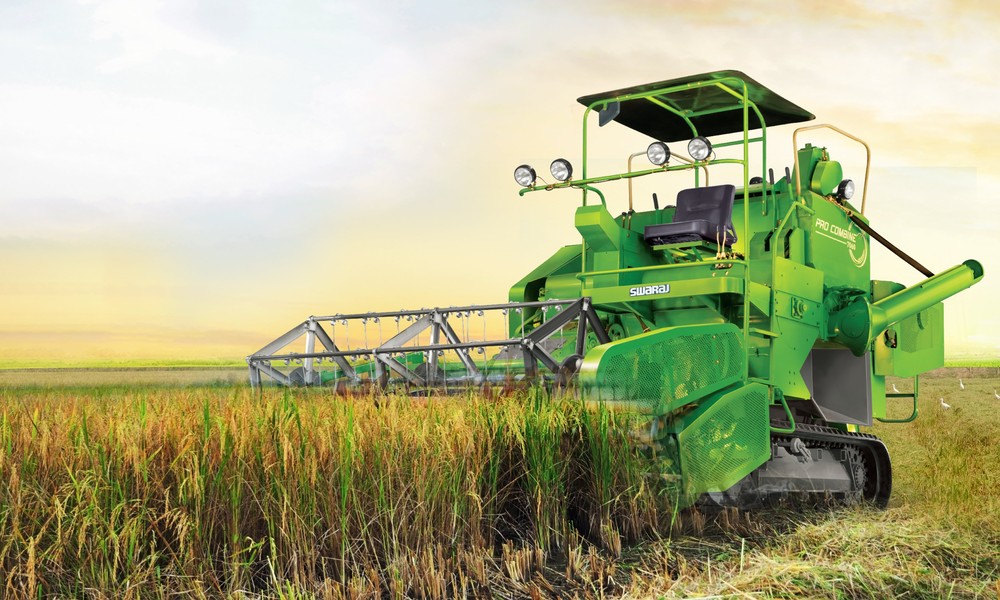
The manufacturing machinery section is on the edge of a groundbreaking era, driven by technological improvements, growing demand for sustainability, and the need for highly methodical operations. Mass-produced and production companies across the world are searching for methods to improve operations, lower costs, and ensure safety. In this article, we’ll see the future of manufacturing equipment and the innovations moulding this crucial part. The technology behind modern harvesters reflects many of these advancements, combining automation, precision systems, and smart monitoring tools to improve agricultural efficiency and productivity.
Mechanization and robotization: the spine of present-day manufacturing.
For some time, mechanization has been a foundation, but recent advances in robotization have taken it to another level. Mechanized machinery, now smarter and more adaptable than ever, can flawlessly handle complicated processes without human intervention. Collective robots, or collaborative robots, are being developed to work along with humans, improving precision and reducing mistakes.
The ability of the Internet of Things (IoT) is authorized equipment.
The IoT (Internet of Things) has brought immediate linkage to industrial equipment, authorizing manufacturers to scan machines, forecast preservation needs, and ensure an even procedure. Internet of Things-authorized machines supply priceless information, allowing for prognostic maintenance, keeping down unforeseen breakdowns, and extending the lifetime of machinery.
3D production and cumulative production for ritual factors.
3D production innovation is a sanction produce to design complicated machinery portions for speed with greater personalization. This change toward cumulative manufacturing substantially lessens the timeline and material depletion associated with the customary manufacturing approach. Commercial machinery that can be quickly customized to specific requirements leads to larger productivity and less stock expenditure.
Energy efficacy and validity in Machinery creation.
Validity has become an important component in the enhancement of new machinery, as companies aim to lessen carbon emissions and energy expenditure. Present industrial machinery is constructed with biodegradable materials, streamlined energy utilization, and sustainable energy incorporation in mind. Energy systematic machinery rewards both the environment and the ground level by reducing functional expenses.
AI-motivated prognostic analytics for enhanced productivity.
AI (Artificial Intelligence) and prognostic analytics are remodeling manufacturing methods to predict production congestion, maintenance requirements, and supply needs. AI – motivated equipment can vigorously adjust infrastructure depending on immediate information, leading to stable output attributes and decreased machine layoff.
Increased protection measures and worker safety.
Operator protection is predominant in any industrial environment. Present-day commercial is provided with progressive safety features such as automatic emergency stoppage, monitoring here and now, and Artificial Intelligence-powered danger evaluation. These qualities make sure that workers can work undoubtedly, knowing that the equipment is created with their protection in mind.
Web-based answers for distant monitoring and management.
Web-based organization lets companies remotely monitor and handle commercial machinery from wherever. This connection provides incomparable flexibility and dexterity in administrations, allowing industries to measure manufacturing, respond to problems immediately, and improve partnership.
As the commercial industry part progresses, invention remains at the centre. From mechanization and Internet of Things to energy efficacy and protection, the recent advancements are making a future where industrial supplies are wiser, more shielded, and more defendable.
